At Cornwall Park District School there are many opportunities to learn more about and enjoy physical education.
Colleen Morrow is our PE Specialist. She offers weekly class lessons for every class, where children develop physical skills as well as having numerous opportunities for them to then apply these in game situations.
The PE programme reflects seasonal activities and help develop skills before providing an opportunity for children compete in school or zone competitions such as athletics, cross country etc.
The school is also lucky to still have an onsite pool facility where in Term 1 of each year children focus on developing water confidence through to advanced swimming skills depending on individual need. Towards the end of Term 1 all Year levels take part in swimming sports where a mixture of competitive and fun events are provided for children to take part in.
Sports Teams
Children at Cornwall Park District School have many opportunities to take part on different sports especially as they move up through the school.
Year 5 and 6 Tuesday Sports
In Terms 2 and 3 students in Year 5 and 6 have the opportunity to compete against other local schools once a fortnight, across a range of codes including netball, soccer, hockey and rugby. On the alternative week, the children practice for their upcoming game. For children who would prefer a more non-competitive environment we provide school based sports activities during these Tuesday afternoon sessions, so all children are active.
Children in all year levels have the opportunity to compete in annual swimming competitions, Athletics Day, cross country as well bi-athlon (Y1-2) or triathlon (Y5/Y6). There is a strong emphasis on taking part, however, as children progress through the school they have more opportunities to be competitive and possibly represent the school in zone competitions involving a number of local schools.
Sports Teams
We register a number of teams for various competitions outside school across a range of codes including basketball, netball and flipper ball. These teams are dependent on parents offering their support as team managers and coaches. Practice sessions are normally organised during lunchtimes or after school. The school is always open to new opportunities especially when parent support is offered.

Colleen Morrow
Health
At Cornwall Park District School we are committed to all children having a positive self belief and to understand that even though we are all unique it is important to accept differences and to treat others with respect. We do this by delivering programmes that focus on
- mental health
- relationships and sexuality education
- food and nutrition
- body care and physical safety
- physical activity
- sports studies
- outdoor education.
To address past issues raised regarding bullying the school implements the Bounce Back programme across the school that builds self efficacy and resilience. The Bounce Back programme provides a framework for developing:
- Positive attitudes and beliefs: Encouraging optimism and a belief in one’s ability to cope with challenges.
- Effective coping mechanisms: Providing tools for managing emotions, stress, and setbacks.
- Strong social and emotional skills: Fostering empathy, communication, and positive relationships.
- A foundation for lifelong wellbeing: Equipping students with the skills and strategies they need to thrive in all areas of their lives.
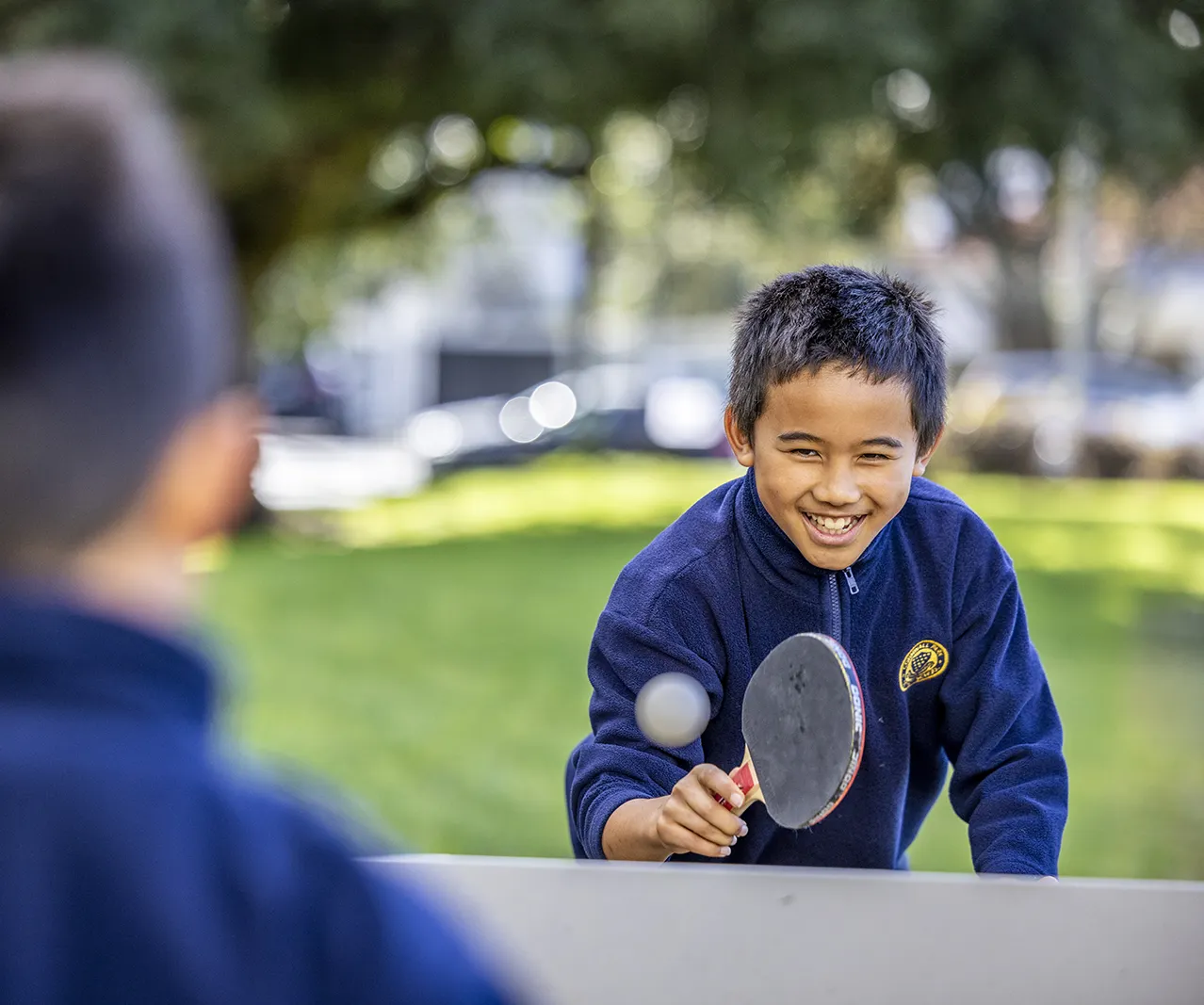
Our full time PE Specialist provides our students plenty of opportunities to experience new sports and access a wide range of events outside our school. We will continue our school-wide emphasis on regular physical activity and continue to ensure that students have the opportunity to develop skills within a range of sports, swimming and team games.
Other programmes the school provides is Life Education, Keeping Ourselves safe, Kia Kaha, Seasons for Growth, Drowning prevention, Bikewise, Travelwise and Puberty education for Year 5 and 6 students. Parents are encouraged to attend parent information evenings for these.
The school is not required to seek permission for students to participate in the health education programme. Parents/Guardians can however request that their child is released from specific parts of the health education programme relating to sexuality education. Parents/Guardians are required to send a request to the Principal in writing.
PMP
Moving Smart PMP
Moving Smart PMP is vital because it directly addresses the physical foundations children need not only for academic success but also for life in general. It acknowledges that many cognitive and practical skills are rooted in strong physical development.
Specifically, it helps children develop:
- Concentration: The ability to focus and maintain attention.
- Self-organisation: Skills related to managing oneself and one’s belongings.
- Handwriting: Fine motor skills necessary for legible writing.
- Memory: The capacity to recall information and instructions.
- Eye Development: Crucial for reading, including the ability to track from left to right.
- Language: An understanding of spatial awareness and how they fit into their environment, which underpins comprehension.
The programme highlights that foundational physical skills are prerequisites for more complex learning. For example:
- Eye tracking is essential for reading.
- Spatial awareness is needed to understand what they read.
- Working memory (holding instructions in mind) is vital for following directions.
- Eye-hand coordination is required for tasks like hitting a ball.
- Fine motor skills are necessary for handwriting.
- Body awareness and spatial awareness are key for coordinating movements like kicking a ball accurately.
What the Programme Focuses On
At its core, Moving Smart PMP is built on the understanding that movement is fundamental to brain development. How children move directly influences how they think, feel, behave, and ultimately, how they learn.
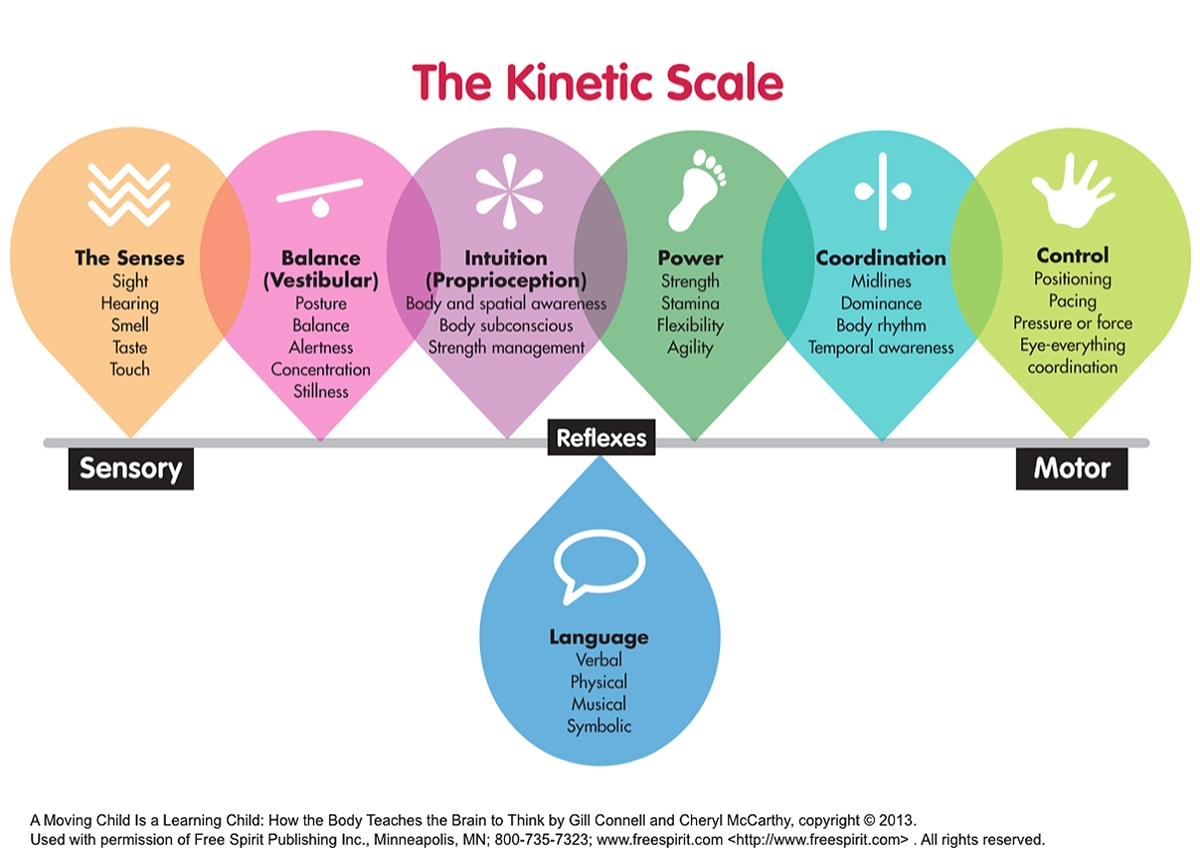
The programme provides children with rich sensory and motor experiences by engaging them in carefully sequenced physical activities. In each session, students rotate through 5-6 stations that specifically target the 6 components from the Moving Smart Kinetic Scale©. These activities involve seeing, hearing, touching, making perceptual judgments, and reacting, all designed to enhance their physical and cognitive development.
This holistic approach ensures that children are not just moving, but are engaging in purposeful movements that build the underlying neural connections essential for all aspects of their learning journey.